
download
Break Through the Sensitivity Barrier: Label-free Detection of Low-abundance Biomolecular Interactions
High-sensitivity, label-free interaction analysis for rare biomolecules, weak interactions, and early drug discovery
This document demonstrates how modern biolayer interferometry (BLI) enables high-sensitivity quantification of rare analytes and parallel analysis of large sample sets, while generating reliable kinetic and affinity data for early drug discovery and complex biological investigations.
Detecting biomolecular interactions at very low concentrations is a common bottleneck in drug discovery and complex biological research. Rare biomolecules and weak binding often generate signals that are hard to resolve, especially when sample availability is limited.
Label-free analysis helps you study biomolecular interactions in real time without modifying your analytes, but when sensitivity becomes limiting, you may reach for injection-based methods such as surface plasmon resonance. These platforms can be powerful, though they often introduce practical constraints, including higher sample volumes, more complex assay setups, longer run times, and higher costs per dataset.
Recent advances in plate-based, label-free detection of low-abundance biomolecular interactions mean you no longer have to choose between sensitivity and scale.
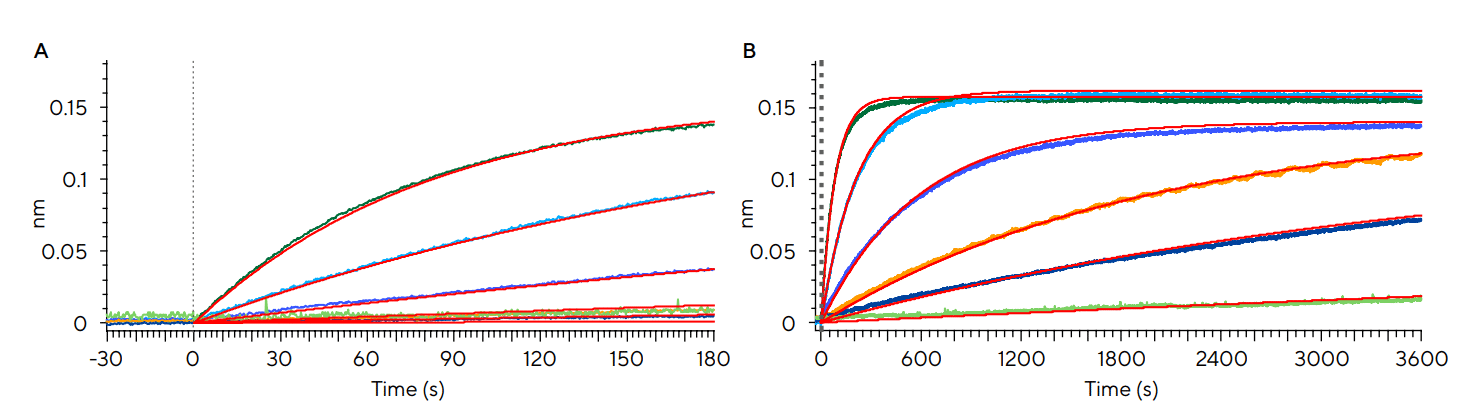
This application note highlights best practices for data generation across a range of compounds and molecular weights using the recently released Octet® R8e system, compared to traditional BLI systems.
Download the free application note to discover how to:
• Streamline biomolecular interaction analysis with a more scalable, cost-efficient workflow
• Support high-volume sample analysis using plate-based assay formats
• Detect low-abundance analytes without labels
• Generate robust kinetics and affinity data for drug discovery and complex biological investigations