Troubleshooting Card

RT-qPCR Method Selection & Troubleshooting Card

Before setup: choose one-step or two-step. After a bad run: work through the failure mode systematically.

Most RT-qPCR problems are decided before amplification starts; by the method choice, the priming strategy, or the enzyme.

This card helps you to catch those decisions before you commit your RNA, and gives you a structured path out when a run still goes wrong.

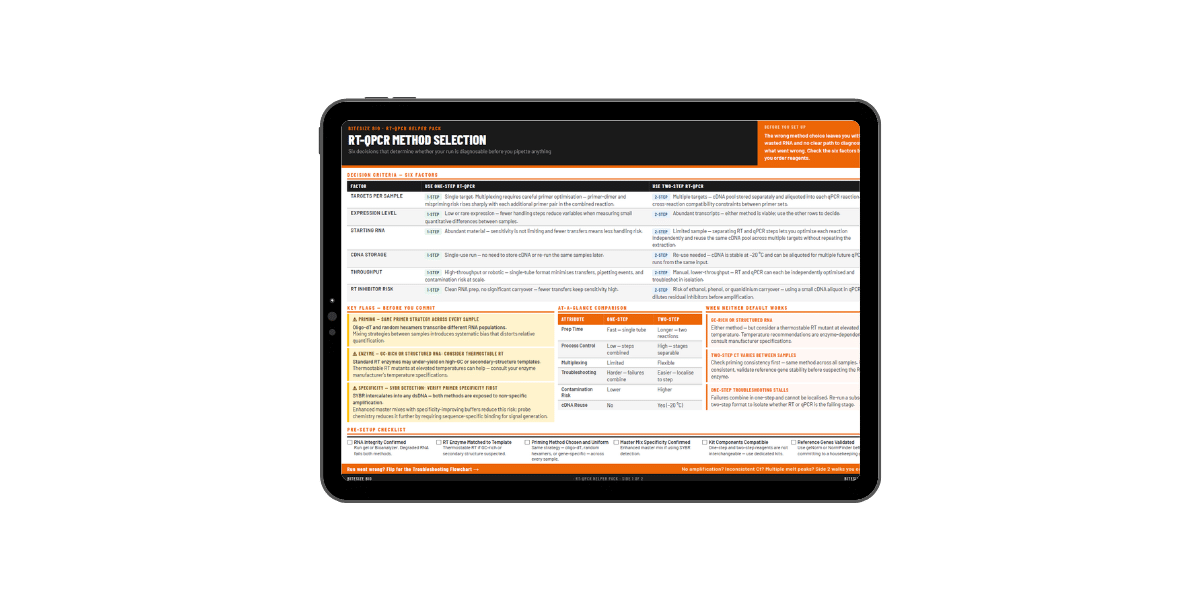
Side 1 is a six-factor decision table for one-step vs two-step, covering target count, RNA quantity, throughput, and inhibitor risk — with flags for the three setup choices that most often cause bad data: priming strategy, enzyme selection for GC-rich templates, and reference gene validation.

Side 2 is a troubleshooting flowchart for the four failure modes that send researchers back to the start: no amplification, inconsistent Ct, multiple melt peaks, and low yield. SYBR and probe workflows are covered throughout. Each branch ends with a clear next action rather than a generic suggestion.

Download now to:

  • Choose one-step or two-step confidently using a six-factor decision table before you commit your RNA
  • Catch setup risks before you run — priming strategy, enzyme choice for GC-rich targets, and reference gene validation, all flagged on Side 1
  • Work through a failing run systematically — follow the symptom flowchart to a clear next action, including how to isolate whether RT or qPCR is the failing step
  • Keep a laminate-ready reference at the bench for no amplification, inconsistent Ct, unexpected melt curve behaviour, and low yield

Download the bench card before your next RT-qPCR setup.

All emails contain an unsubscribe link. You can review our privacy policy, cookie policy and terms and conditions online.